• Showing posts with label processed meats. Show all posts
    Showing posts with label processed meats. Show all posts

    Monday, November 15, 2021

    Restructuring meat: the McRib and friends


    For the most part, store-bought sandwiches don’t carry much meaning for me, except the McRib. I don’t really like it (the sauce is too sweet), but the McRib makes me think of my mother. She loved it, and when it would ‘come back’ we had to go to McDonalds and get one. Now, every time it resurfaces, I smile and think of my mom and the joy she got out of a sweet BBQ pork sandwich.
    Mom with Wyn at a
    Meat Conference
     in Nebraska

    The McRib is actually a fun, meat science success story. In the 1970’s, a meat scientist at the University of Nebraska named Dr. Roger Mandigo worked with the National Pork Board to develop a product that could be sold in McDonalds. He developed what we call a restructured product. It’s really a simple sausage made with pork, water, and salt, but rather than being shaped in a cylinder by a sausage casing, it’s formed into a shape that looks like ribs.

    Sausages are made by using salt to extract the proteins in the meat. Salt literally reshapes the proteins at a molecular level, turning them inside out, and causing them to stick together. When the sausages are cooked, the texture of the final product changes. Think about how the texture of a hamburger patty is different from a sausage or hotdog. How much the proteins are extracted affects the texture changes and that will differ based on how much salt or other ingredients are used and how much they are mixed.

    Dr. Mandigo is a giant in
    meat science. Working with
     him at Nebraska would be
    the equivalent to being
    coached by Lou Holtz or
    learning Physics from
    Dr. Sheldon Cooper.


    When salt is mixed with ground meat, the result is actually called a batter and can be poured or injected into trays or casings that will create any shape. It’s like the way cakes take the shape of the pan when you cook them.  It was actually the folks at McDonalds that settled on the rib shape.

    If you look at the ingredients of the McRib on McDonald’s website, you’ll see the ingredients are pork, water, salt, dextrose and rosemary extract. Pork is trimmings only from skeletal muscles, like the ones that move bones around. When salt is added to the pork, the extracted proteins will absorb water, making the patty juicier.  The dextrose is just sugar that’s added to counter-act the saltiness, and rosemary extract is an antioxidant that helps prevent rancidity and improve flavor.

    Slather the patty in sweet sauce, add onion, pickle and a sesame seed bun and… BOOM! Iconic Sandwich!

    Poultry scientists have used similar methods to develop chicken nuggets in all sorts of fun shapes. We had Dino-nuggets for lunch just the other day. The McChicken sandwich is another restructured product. So are chicken fries, fish sticks, Salisbury steak, and some chicken-fried steaks.

    Monday, October 26, 2015

    The sky is not falling on hotdogs and bacon


    According to the International Agency for Research on Cancer (IARC) processed meats have been classified as a Class 1 Carcinogen. News stories are quick to point out that asbestos and tobacco are also Class 1 carcinogens. You might like to know that other things in that list include sunlight, birth control, alcohol, and hormone therapy. Red meat was classified as a Class 2A, along with working as a hairdresser and grilled food. The IARC has looked at hundreds of items and only one has made the ‘not carcinogenic’ category. Furthermore, just because a substance is in the same classification as tobacco and asbestos, it doesn’t mean that its relationship to cancer is as strong as those substances. 

    I’m not telling you this because I want you to spend the rest of your life eating bland food in the dark; I just want you to know that the sky is not falling.

    I’m not ‘that kind of doctor,’ but I know that cancer is a very complicated disease. Everyone wants to find that one silver-bullet prevention, but it’s just not out there. Genetics, exercise, medicine, whether or not you’ve had a baby, and diet can all affect your cancer risk. 

    Processed meats are important

    The ingredients and processes used to make hotdogs and bacon and sausage are about more than creating tasty treats to eat at tailgates. Processed meats help us to use meat more efficiently, waste less food and feed more people. 

    Processed meats allow us to use the whole animal. There are lots of cuts on the animal that wouldn’t taste very good if we just tried to cook them like fresh meat. They may be too tough, too small, or too fatty. Meat processors grind them up and mix them all together to make sausages and hotdogs. 

    Processed meats allow us to store meat for longer times. Ingredients like salt, sugar, and nitrites help fend off bacteria that cause it to go bad. They also keep it from becoming rancid. Think about how long hotdogs and ham last in the fridge in comparison to fresh steaks and burgers.

    Processed meats are a good source of inexpensive protein. Foods like hotdogs and sausages are inexpensive, but they provide protein. People need that protein, especially kids. Protein helps you feel fuller, longer after a meal. It also helps build and repair muscles as kids grow. Research has shown that kids fed protein perform better in school. In some poor families, processed meats are the only way they can afford to feed their kids protein.

    Processed meats help prevent food-borne illness. Ingredients like salt and lactates help keep dangerous bacteria, like Listeria, from growing, and nitrites are added to prevent the growth of Clostridium botulinum, the bacteria that causes Botulism.

    There is lots of good information circulating today about the benefits of processed meats and the complicated issues around this new classification.


    I really like this interview from CBS News this morning, looking at this study in the real world.

    So, think about the benefits of processed meats. Enjoy them.


    Wednesday, May 13, 2015

    Don’t judge cooked meat by its color.

    Just… don’t.

    Everyone, myself included, does it. We look at the color of the inside of a burger or chicken to determine if it’s cooked. Is it pink? Nope. Chomp chomp!

    Here’s the problem: Color is not a good indicator of safe cooking temperatures. You have to use a meat thermometer to be sure meat is cooked to safe temperatures.
    Meat turns from pink to brown because the protein that makes meat red (myoglobin) is denatured as it is cooked. The protein is damaged and doesn’t reflect light in the same manner anymore, so the meat appears brown.
    Lots of factors can affect how quickly or slowly the protein is denatured as it is heated. Meat color changes can vary due to the pH (acidity) of the meat, the age and gender of the animal, how long it was stored, the way it was packaged, whether it was frozen, even the feed and water of the animals can affect cooked meat color.

    Sometimes meat turns brown too soon!

    Meat scientists call this phenomenon Premature Browning. It can be really dangerous because meat looks done, but it hasn't been cooked to a safe temperature.

    This photo is from a great fact sheet about beef color from the National Cattlemen’s Beef Association. Both of these patties were cooked to an unsafe temperature (55°C or 131°F). Patty A looks very undercooked, but patty B looks done.


    I have a previous blog post about fresh meat color. Remember that we talked about meat being oxygenated (red), deoxygenated (purple), or oxidized (brown)? Researchers at Kansas State found that when patties were cooked in the oxidized (brown) state, their cooked color was brown, even at temperatures that were too low to kill deadly bacteria like E. coli and Salmonella. Other research has found that the packaging can cause meat to brown faster, too.

    Regardless of why the meat turns brown at too low of a temperature, sometimes it happens. The best way to insure that your meat is cooked properly is to use a meat thermometer.
    Ground beef should be cooked to 160°F and poultry should be cooked to 165°F.


    Sometimes meat stays pink too long!

    Meat scientists call this phenomenon Persistent Pinking. It is not as much a food safety issue as it is a perception and eating quality issue. When meat looks pink, even if it’s been thoroughly cooked, people will think it’s undercooked and will keep cooking it until its way overcooked. When it’s overcooked, it tastes terrible.
    I am conducting research on persistent pinking in ground beef this summer. 
    These patties were all cooked to exactly 160°F.
    You can see how some of them are still pink in the middle.

    Research has shown that a high pH (more basic) can protect the proteins at greater temperatures and keep them from turning brown. They may also stay pink because of a higher concentration of the myoglobin protein. Right now our research is creating more questions than answers, but it sure is interesting.

    Persistent pinking can also be caused by outside substances interacting with the meat and creating the pink color.
    Nitrites are a good example of one of these outside substances. Sometimes we want this pink color to appear, like in the case of ham, sausages, or bacon. However, very small amounts of nitrites can get into the meat (especially poultry) and create a pink color that kind of looks like ham. If you don’t expect the meat to be pink and it is, you may think it’s undercooked.

    These pictures were sent to me by Dr. Jim Claus at the University of Wisconsin. He is one of the leading researchers in persistent pinking in processed meats. These are a pair of turkey slices and some tuna chunks with persistent pinking problems. All of these were cooked to a safe temperature, but some clearly have some color issues.


    This is a pork chop that was cooked wrapped in bacon. Looks like the nitrites in the bacon seeped into the pork chop and created a pink color.


    Sometimes the ovens that cook the meat can introduce gasses that react with the muscle and cause it to turn pink. We like it when this happens in smoked meats, but when you don’t expect it, you may be concerned it hasn’t been cooked enough.

    This is a smoked sausage from an awesome BBQ restaurant in south Texas. See how the smoke has created the ring of pink around the edge of the sausage?

    When you see pink color in meat, look to see where the off-color is within the pieces. Undercooked meat will be pink in the middle, but persistent pinking issues are more likely to occur on the surface.


    Even what the animals (especially birds) eat or drink can introduce substances that can change the cooked color of their meat. Nitrates and nitrites that occur naturally in the feed and water can remain in the birds and create some color problems, especially around the bone.

    This is another picture of some cooked chicken pieces from Dr. Claus. You can see some really severe pinking problems in them.


    If you are served something that you think looks underdone, it’s OK to ask what temperature it was cooked to. Sometimes meat is just stubbornly pink, but sometimes it may actually be underdone. When it comes to my kids, if I think a piece of meat they've been served may be underdone, you bet I'll ask the waiter about it. 

    The best way to know is to use a meat thermometer.
    Cook it to a temperature not a color.


    The USDA has a great fact sheet about meat color that gives more detail about persistent pinking and premature browning.


    Friday, January 9, 2015

    What’s in a food label? Uncured, naturally cured or no nitrate or nitrite added.


    This year I’ve been working on a series of posts about food labels and what they mean. In earlier posts, I talked about what the Natural label means on a meat package, but I get some questions about Uncured, Naturally Cured or processed meat products that are made without nitrate or nitrite.
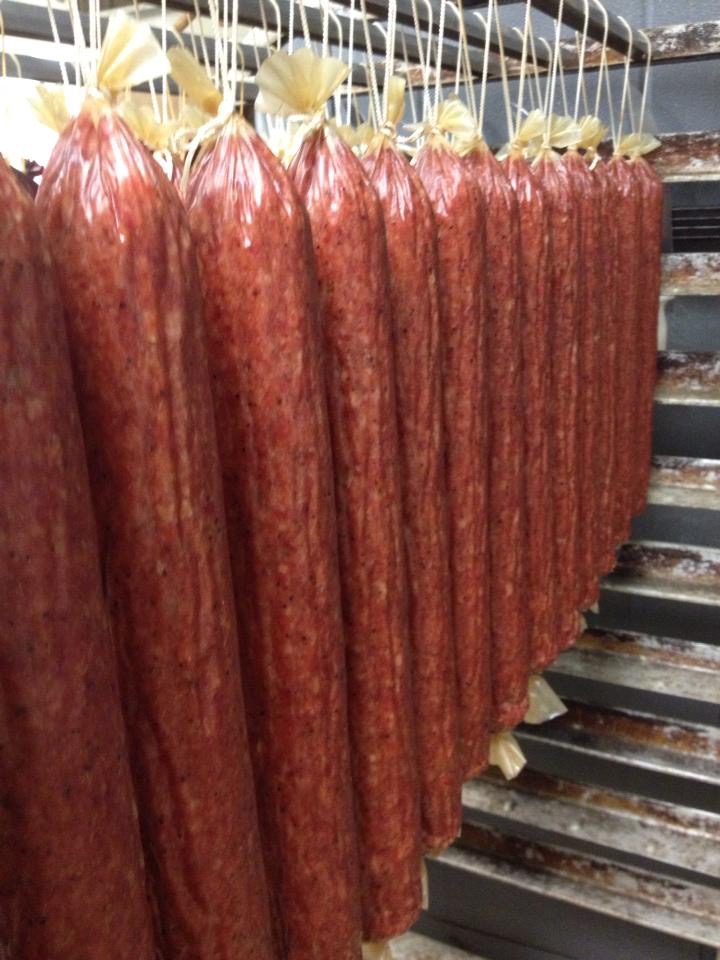
    uncured salami package
    I’ve covered this topic before in a post called ‘What is Nitrite?’, but I wanted to cover it again in the labeling series.
    Some processors want to create friendlier, less chemically labels and choose to remove nitrates. Also, when meat processors want to use the Natural or Organic labels, they are not allowed to add nitrites and nitrates as they are classified by the USDA as chemical preservatives.

     
    What if you just removed these ingredients from natural products?
    Just take it out. Problem solved.

    Some processors do that, but without nitrite, deli ham would not be pink, it would basically be just a pork roast. Tasty meats like bacon and hotdogs wouldn’t have the same flavors we enjoy. And, most importantly, all of these products would be more susceptible to spoilage and the growth of dangerous bacteria. The nitrite helps them last longer on store shelves and in your refrigerator. Nitrite also makes them safer for you and your family.

    So, removing it doesn’t work.

    What is nitrite anyway and what is its purpose in meat?

    Nitrite is added to processed meats like ham, bacon, and sausages (hotdogs, bologna, etc) for 4 reasons:

    1.       It prevents the growth of Clostridium botulinum (the bacteria that causes botulism). Botulism can shut down your nervous system and that’s not healthy. It also helps control other dangerous pathogens and bacteria that cause spoilage, so it helps keep meat safe.

    2.       It is a very powerful antioxidant and keeps the meat from going rancid. The fat in processed meat can get funky flavors if allowed to oxidize, and nitrite helps to keep that from happening. Ever notice why a package of ham can last for weeks in your fridge while leftovers go bad in a few days?

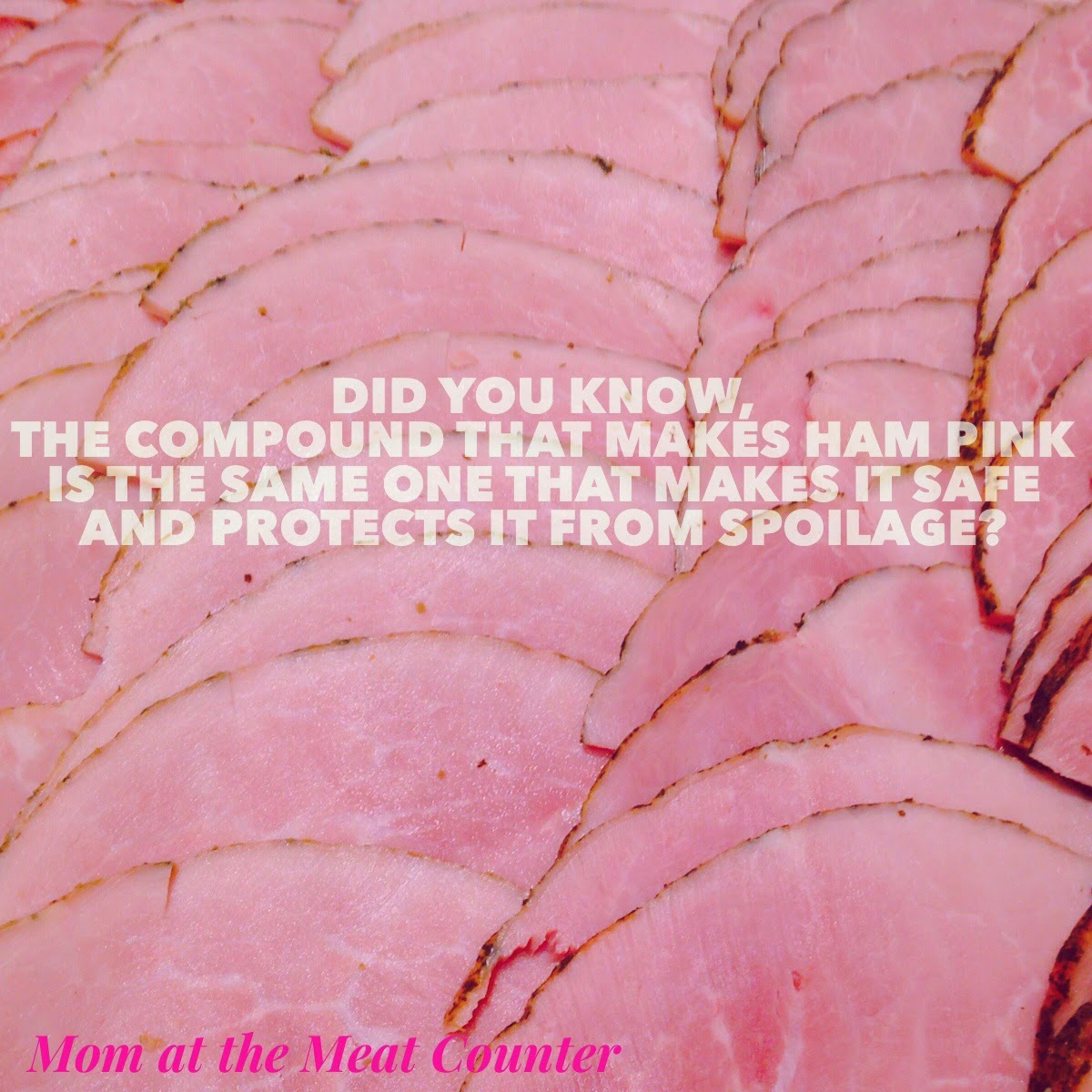
    3.       It gives cured meats their distinct pink color. The nitrite reacts with the muscle protein and changes it to pink, and it stays pink for a much longer time than fresh meat stays red.

    4.       It gives cured meats their distinct flavor. That unique “hammy” and smoky flavor of a ham or that unique bacon flavor in bacon comes from the nitrite.

    
    German researchers discovered that nitrite and
    not nitrate (curing cousins) was the form of
    curing salt responsible for meat curing, and
    started to exclusively use nitrite for curing.
    Also, without nitrite, several products would completely lose their identity. The USDA has standards of identity that regulate what is a hot dog, bologna, or even bacon and nitrite is an important ingredient for making them what they are. Without it, they are no longer “cured.” This means bacon without nitrite would no longer be bacon, but would instead be cooked pork belly.

    How do “Natural” and “Cured” coexist?

    Even though, nitrate and nitrite are not allowed to be directly added to natural and organic labeled meat products, other ‘natural’ ingredients with high levels of naturally-occurring nitrate can be used to replace the synthetic forms.

    Many vegetables contain high levels of naturally accumulating nitrate. In fact, the main human dietary source of nitrate isn’t processed meats, but actually green leafy vegetables like spinach and celery. When the nitrate is converted to nitrite, presto… meat curing can naturally happen.

    Meat processors can use vegetable powder in processed meats as a source of nitrite to create the pink color and cured flavor. On the label, it may be listed as celery powder, flavoring, or natural flavoring. The nitrite derived from vegetables and found in vegetable powder and in natural meats is exactly the same compound as that found in conventionally cured meats.

    However, this substitution doesn’t replace all the nitrite needed to provide important quality and safety attributes. The final nitrite levels are lower and the vegetable powder may have to be limited because it can give the meat product its own flavors, too. These lower nitrate levels mean that the naturally cured meats are not as well protected from spoilage and pathogenic bacteria like Clostridium botulinum and Listeria monocytogenes. So, other steps must be taken to help keep the product safe. Meat processors add natural antimicrobial ingredients or use extra processes like high pressure processing to protect against spoilage and dangerous bacteria.

    So what’s the difference, really?

    Generally, natural meats are going to be more expensive because the ingredients that go into them are more expensive. However, when your dinner hits the table, natural and conventionally-cured meats should taste the same and both are safe and nutritious for your family.


    For this post, I want to thank Dr. Jeff Sindelar from the University of Wisconsin for helping me explain all the nitrate/nitrite chemistry. Jeff and I have been buddies since graduate school, and he is a great meat scientist who has devoted his research to naturally-cured meats. You can see him talking about it in his Meat Myth Crusher video.


    Wednesday, May 23, 2012

    Kids eat paste. Why worry about meat glue?

    You may have recently seen something on the internet, social media, or the news about something called ‘meat glue.’ What the heck is that?
     
     What the media refers to as ‘meat glue,’ is known in the meat industry as transglutaminase (TG) or beef fibrin. They are enzymes used to bind proteins together. Enzymes are proteins that cause chemical reactions to happen in living things. There are several types of proteins in the body, proteins that hold things together (think tendons), proteins that make things move (muscle), proteins that break down food to produce energy (some of these are enzymes), proteins than break down other proteins (some of these are enzymes used as meat tenderizers), and proteins that help build other proteins to help them function correctly.
     
    TG and fibrin fall into the last category. They help to build other proteins. They cause proteins in muscle to bind with one another to form a strong bond. So in meat, they can help bind two pieces of meat together.
     
    Why is it used in the meat industry?
    
    
    Beef tenderloin
     Muscles are all kinds of crazy shapes. Some are huge, some are long and skinny, some are shaped like triangles or trapezoids or who knows what. It is hard for butchers to take those muscles with all those different shapes and form them into cuts of meat that are the size and shape that people want to eat. For example, the tenderloin is the most tender muscle in the body and is used to make filet mignon. It is about as big around as a base ball at one end and tapers down to a point at the other. On one end, butchers can cut nice pretty round steaks, but as they cut more and more steaks, they get smaller and smaller. As the butcher gets closer and closer to the small end, the pieces are too small to make a nice steak. They are still the most tender muscle in the body, but they won’t make pretty, portion sized steaks. So, meat scientists and chefs use TG or fibrin to stick two tenderloins together with the skinny end of one adhered to the fatter end of the other one and visa versa. It is still tenderloin, still the most tender cut in the body, but with TG, butchers can cut more, pretty round steaks. More meat for everybody!

    Sometimes, chefs use TG or fibrin to get the bacon to stick to filet mignon. I’ve seen examples of it used on salmon and to make that imitation crab stuff.
     
     Where is it found?
     
    If these ingredients are used in a food that you buy at the store, according to USDA, the food must be labeled ‘formed’ or ‘fabricated’ or ‘shaped’, as in ‘Formed Chicken Breast’ or ‘Fabricated Steaks.’ A meat product containing TG or fibrin will also have an “enzyme” to transglutaminase enzyme” in the ingredient list. When you cook them, you should treat them like ground meat and cook them to at least 160°F for red meat and all chicken should be cooked to 165°F.  
     
    Of course, you can’t read ingredient statements when you dine at restaurants. You can always ask. Foods that are prepared prior to coming to the restaurant will have TG on their ingredient list, and a chef will be able to tell you if he or she is using it themselves. They should be trained in preparing foods containing TG safely, so it should be cooked to safe temperatures.

    Some people are concerned that TG or fibrin are going to be used to turn cheap cuts of meat into cuts that can be sold at a higher price. Cheap cuts of meat are cheap for a reason; nothing can change the texture or flavor to make them like filet mignon. If a chef or a company were doing something like that, not only would it hurt their business, it would be against the law. The USDA dictates labeling laws on cuts of meat, and only tenderloin can be labeled as ‘tenderloin’. The folks at the American Meat Institute stated that they do not have any evidence that these deceptive practices are happening.

    Furthermore, TG is too expensive to be used on cheap cuts of meat. Because of its price, you will only see it used on expensive cuts like tenderloin or salmon patties or in high-end restaurants where chefs demand higher prices. So, you’re not really consuming it very often. AMI estimates that about 8 million pounds of meat containing these products are sold annually, that is out of 49 billion pounds of beef and pork sold each year (0.016%).
     
    As a meat scientist, I think that TG and enzymes like it are neat and exciting. I think it is fun to see what chefs and the guys and girls in research and development come up with using them. I don’t feel like we are trying to trick anyone. And, I know to cook these products to 160°F.
     
    Here are some other good sources on transglutaminase and fibrin.

    • This video is the best I’ve seen explaining the process and showing how TG is used.
    • In this Meat Myth Crusher video, my friend Dr. Dana Hanson, from North Carolina State University explains how TG is used.
    • This is a blog post about meat glue from culinary blog called Cooking Issues.
    • This is a statement about binding enzymes used in meat products from the American Meat Institute.