• Showing posts with label hotdogs. Show all posts
    Showing posts with label hotdogs. Show all posts

    Monday, October 26, 2015

    The sky is not falling on hotdogs and bacon


    According to the International Agency for Research on Cancer (IARC) processed meats have been classified as a Class 1 Carcinogen. News stories are quick to point out that asbestos and tobacco are also Class 1 carcinogens. You might like to know that other things in that list include sunlight, birth control, alcohol, and hormone therapy. Red meat was classified as a Class 2A, along with working as a hairdresser and grilled food. The IARC has looked at hundreds of items and only one has made the ‘not carcinogenic’ category. Furthermore, just because a substance is in the same classification as tobacco and asbestos, it doesn’t mean that its relationship to cancer is as strong as those substances. 

    I’m not telling you this because I want you to spend the rest of your life eating bland food in the dark; I just want you to know that the sky is not falling.

    I’m not ‘that kind of doctor,’ but I know that cancer is a very complicated disease. Everyone wants to find that one silver-bullet prevention, but it’s just not out there. Genetics, exercise, medicine, whether or not you’ve had a baby, and diet can all affect your cancer risk. 

    Processed meats are important

    The ingredients and processes used to make hotdogs and bacon and sausage are about more than creating tasty treats to eat at tailgates. Processed meats help us to use meat more efficiently, waste less food and feed more people. 

    Processed meats allow us to use the whole animal. There are lots of cuts on the animal that wouldn’t taste very good if we just tried to cook them like fresh meat. They may be too tough, too small, or too fatty. Meat processors grind them up and mix them all together to make sausages and hotdogs. 

    Processed meats allow us to store meat for longer times. Ingredients like salt, sugar, and nitrites help fend off bacteria that cause it to go bad. They also keep it from becoming rancid. Think about how long hotdogs and ham last in the fridge in comparison to fresh steaks and burgers.

    Processed meats are a good source of inexpensive protein. Foods like hotdogs and sausages are inexpensive, but they provide protein. People need that protein, especially kids. Protein helps you feel fuller, longer after a meal. It also helps build and repair muscles as kids grow. Research has shown that kids fed protein perform better in school. In some poor families, processed meats are the only way they can afford to feed their kids protein.
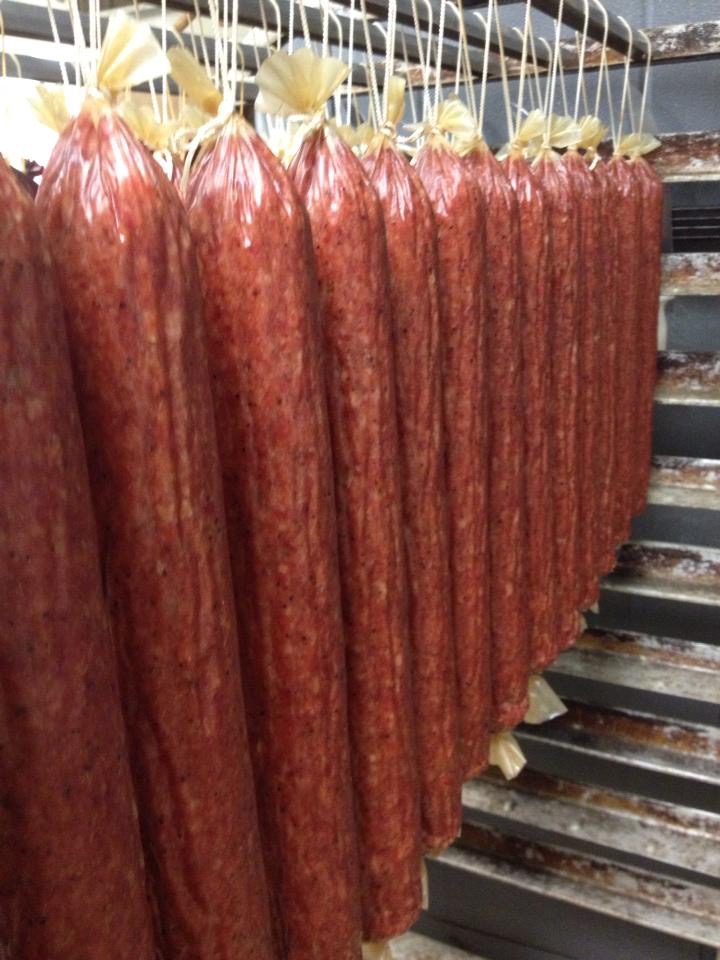
    Processed meats help prevent food-borne illness. Ingredients like salt and lactates help keep dangerous bacteria, like Listeria, from growing, and nitrites are added to prevent the growth of Clostridium botulinum, the bacteria that causes Botulism.

    There is lots of good information circulating today about the benefits of processed meats and the complicated issues around this new classification.


    I really like this interview from CBS News this morning, looking at this study in the real world.

    So, think about the benefits of processed meats. Enjoy them.


    Friday, January 9, 2015

    What’s in a food label? Uncured, naturally cured or no nitrate or nitrite added.


    This year I’ve been working on a series of posts about food labels and what they mean. In earlier posts, I talked about what the Natural label means on a meat package, but I get some questions about Uncured, Naturally Cured or processed meat products that are made without nitrate or nitrite.
    uncured salami package
    I’ve covered this topic before in a post called ‘What is Nitrite?’, but I wanted to cover it again in the labeling series.
    Some processors want to create friendlier, less chemically labels and choose to remove nitrates. Also, when meat processors want to use the Natural or Organic labels, they are not allowed to add nitrites and nitrates as they are classified by the USDA as chemical preservatives.

     
    What if you just removed these ingredients from natural products?
    Just take it out. Problem solved.

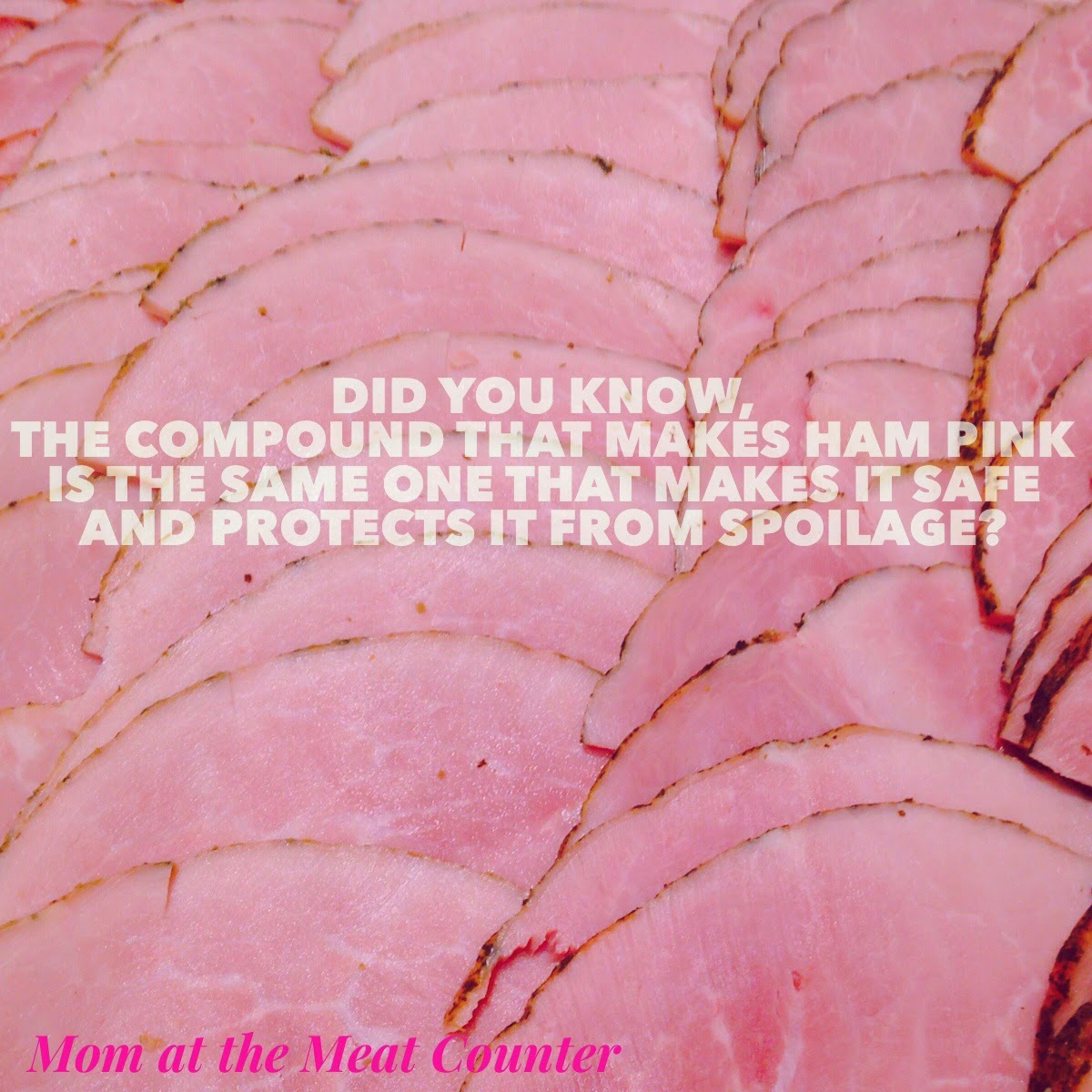
    Some processors do that, but without nitrite, deli ham would not be pink, it would basically be just a pork roast. Tasty meats like bacon and hotdogs wouldn’t have the same flavors we enjoy. And, most importantly, all of these products would be more susceptible to spoilage and the growth of dangerous bacteria. The nitrite helps them last longer on store shelves and in your refrigerator. Nitrite also makes them safer for you and your family.

    So, removing it doesn’t work.

    What is nitrite anyway and what is its purpose in meat?

    Nitrite is added to processed meats like ham, bacon, and sausages (hotdogs, bologna, etc) for 4 reasons:

    1.       It prevents the growth of Clostridium botulinum (the bacteria that causes botulism). Botulism can shut down your nervous system and that’s not healthy. It also helps control other dangerous pathogens and bacteria that cause spoilage, so it helps keep meat safe.

    2.       It is a very powerful antioxidant and keeps the meat from going rancid. The fat in processed meat can get funky flavors if allowed to oxidize, and nitrite helps to keep that from happening. Ever notice why a package of ham can last for weeks in your fridge while leftovers go bad in a few days?

    3.       It gives cured meats their distinct pink color. The nitrite reacts with the muscle protein and changes it to pink, and it stays pink for a much longer time than fresh meat stays red.

    4.       It gives cured meats their distinct flavor. That unique “hammy” and smoky flavor of a ham or that unique bacon flavor in bacon comes from the nitrite.

    
    German researchers discovered that nitrite and
    not nitrate (curing cousins) was the form of
    curing salt responsible for meat curing, and
    started to exclusively use nitrite for curing.
    Also, without nitrite, several products would completely lose their identity. The USDA has standards of identity that regulate what is a hot dog, bologna, or even bacon and nitrite is an important ingredient for making them what they are. Without it, they are no longer “cured.” This means bacon without nitrite would no longer be bacon, but would instead be cooked pork belly.

    How do “Natural” and “Cured” coexist?

    Even though, nitrate and nitrite are not allowed to be directly added to natural and organic labeled meat products, other ‘natural’ ingredients with high levels of naturally-occurring nitrate can be used to replace the synthetic forms.

    Many vegetables contain high levels of naturally accumulating nitrate. In fact, the main human dietary source of nitrate isn’t processed meats, but actually green leafy vegetables like spinach and celery. When the nitrate is converted to nitrite, presto… meat curing can naturally happen.

    Meat processors can use vegetable powder in processed meats as a source of nitrite to create the pink color and cured flavor. On the label, it may be listed as celery powder, flavoring, or natural flavoring. The nitrite derived from vegetables and found in vegetable powder and in natural meats is exactly the same compound as that found in conventionally cured meats.

    However, this substitution doesn’t replace all the nitrite needed to provide important quality and safety attributes. The final nitrite levels are lower and the vegetable powder may have to be limited because it can give the meat product its own flavors, too. These lower nitrate levels mean that the naturally cured meats are not as well protected from spoilage and pathogenic bacteria like Clostridium botulinum and Listeria monocytogenes. So, other steps must be taken to help keep the product safe. Meat processors add natural antimicrobial ingredients or use extra processes like high pressure processing to protect against spoilage and dangerous bacteria.

    So what’s the difference, really?

    Generally, natural meats are going to be more expensive because the ingredients that go into them are more expensive. However, when your dinner hits the table, natural and conventionally-cured meats should taste the same and both are safe and nutritious for your family.


    For this post, I want to thank Dr. Jeff Sindelar from the University of Wisconsin for helping me explain all the nitrate/nitrite chemistry. Jeff and I have been buddies since graduate school, and he is a great meat scientist who has devoted his research to naturally-cured meats. You can see him talking about it in his Meat Myth Crusher video.


    Tuesday, May 14, 2013

    Its a HUGE HUGE HUGE industry!

    In my job, I have lots of great opportunities to see the inside of food processing facilities and farms that most people don’t get to see. That’s part of the fun of being a meat nerd. I am always amazed by the sheer size and scope of the industry when I get to see these facilities in action.

    
    Huge pile of neatly-stacked bacon
    Mound of bacon.
     
    For example, I was in a pork processing plant last summer and I was standing in the middle of the bacon slicing room. The slicers are these huge machines with circular blades like 4 feet across. They move so fast you can’t see them. They sliced pieces of bacon faster than I could count. I found a really cool  bacon slicing video on youtube.

    At the plant I was visiting, I think there were six lines slicing bacon all running at the same time, at least 16 hours a day, 5 days a week. That is an incredible about of bacon. That plant harvested 19,000 pigs per day in 2011. Processors get about 15.4 lbs of cured bacon out of every hog, that’s 292,600 lbs of bacon, PER DAY, in one plant! The daily hog slaughter in the US in 2011 was 438,630 PER DAY, that’s 6.7 million pounds of bacon, PER DAY!!!  
    Of course, there are 313 million people in the US and they usually eat three times a day, seven days a week. Not to even mention exports.

    (See how I can get lost in the enormity of our food system! I’m just a meat head.)


    chicks on a broiler farm
    A few of the 80,000 chicks on the Munyon Farm
    We went on a tour of farms with some ladies a few weeks ago called Moms on the Farm Tour. Some local chicken farmers, Jared and Anita Munyon were nice enough to allow our group to tour their farm on a Saturday morning. They have four chicken houses where they raise broilers for a company called Simmons. Each of their chicken houses hold about 20,000 chickens. That’s 80,000 chickens on their farm! They will get about 5 sets of chickens each year, so this one farm produces 400,000 chickens each year. There are about 30,000 farms that raise chickens in the US, and 95% of them are family-owned like the Munyon’s Farm. Americans eat, on average about 83 pounds of chicken each year, so we need lots of them to keep us supplied in chicken nuggets, breasts, and chicken wings, over 37 billion pounds of chicken meat.


    Red Simmental cow
    One of Vallie's beef cows. She has 13.
    The beef industry is even more amazing to me because the cattle come from so many different farms in so many different places in the US. There were over 34 million calves born in 2012 and the US produced over 26 billion pounds of beef, but 90% of the beef farms in the US have fewer than 100 head and the average herd size is 44 head. That means a whole lot of people have input in the beef industry; from folks like my dad with 8 cows to the Deseret Cattle Co. in Florida with 42,000 cows. That’s right; the largest cattle ranch in the US sits between Disney World and Cape Canaveral.


    Students making hot dogs
    Some students learning to make hotdogs.
    A little slower than the commercial plants.
    Then there are the hotdog numbers: It’s hard to know exactly how many hotdogs are consumed in this country, but it is estimated that Americans consume 20 billion hotdogs each year, which works out to about 70 hotdogs per person. On Memorial Day alone, US consumers will enjoy over 150 million hotdogs. That’s enough hotdogs to stretch from Washington DC to Los Angeles five times!!! During the summer time, US consumers will eat 7 billion hotdogs, or 818 each second.
     
    All of this meat has to be produced by somebody. According to industry stats, the meat and poultry industries employ over 2 million workers paying them over $68 billion in wages. See what I mean about a HUGE industry?!?

    When we buy our 2 or 3 pounds of meat at the grocery store or a steak a restaurant, it’s easy to forget that there are 313 million people in the US who are buying their few pounds of meat for this week, too. Our food system is huge! It’s really amazing to me that we can produce and distribute so much food each day.

    It’s also sad to know that so much food is wasted each day, but that’s another day’s post.

    Friday, October 28, 2011

    What is Nitrate?

    I recently had a discussion with another mom about nitrates and nitrites in meat and their safety. She said that she buys nitrate-free products for her kids. She is a smart lady and wants to do the best for her family’s health, but she didn’t even understand what nitrate or nitrites are and sure didn’t know why they were added to meats.
    I touched on nitrite a little bit in my processed meats post, but I thought a whole post about them might clear things up.
    Question one. What is nitrate/nitrite?  

    Nitrates and nitrites are chemical groups, part of lots of compounds, both natural and man-made. They are a combination of a nitrogen atom and either two (nitrite; NO2) or three (nitrate; NO3) oxygen atoms. When it’s added in processed meats it is usually combined with sodium or potassium (you would see it as Sodium Nitrite on the ingredient statement). Nitrite (the one with 2 oxygens) is most commonly used in meats.
    I mentioned in a previous post the benefits of nitrite in the diet and linked to the video by Dr. Nathan Bryan.
    Question two. Why is nitrite added to meats?
    Good question. Have you ever heard of cured meats of meat curing? Curing meat requires nitrite. Some good examples of cured meats are ham, bacon, hotdogs, and pepperoni.
    The nitrite in cured meats serves several purposes.

    1. It gives cured meats that pretty pink color and the color that lasts a long time (unlike fresh meat color).
    2. It gives cured meats their distinct flavor.  (Think about how a ham tastes so different from a pork roast.)
    3. It protects the meat from organisms that cause spoilage and disease. Cured meats have a longer shelf life than most uncured meats. Nitrite directly prevents the growth of that nasty ol’ Clostridium botulinum, which is the bacteria that causes botulism (it’s also the organism used to make Botox, but that doesn’t mean we want it in our meat).
    4. It prevents the meat from going rancid and protects the flavor of the meat.

    Many historians think that meat curing was discovered by accident when salt contaminated with nitrite was rubbed on meat. (Salt was one of the first ingredients added to meat).

    Question three. Why do we have uncured or no nitrite/nitrate added products?

    Natural and organic products have become very popular in the last few years.  I covered this in one of my first blog posts. The definitions of Natural and Organic are regulated by USDA, and nitrates and nitrites are not permitted as an ingredient in products with those labels. If you try to make cured meat products like ham, bacon, or hotdogs without nitrite, the meat turns out a gray color and won’t have the typical cured flavor. Not so good.

    Why don’t people want it?

    When consumed in large quantities, nitrite can be toxic. Also, nitrite can combine with protein in meat at high temperatures and form nitrosamines, which are cancer-causing agents. Now, the amount of nitrite added in processed meats is very small and most processed meats are not cooked at those very high temperatures, so the level of nitrosamines formed is almost none. Processors also started adding the antioxidants, ascorbate (vitamin C) and erythorbate (structurally related to vitamin C), to cured meats to block the formation of nitrosamines. There has also been some scary stuff published that attempted to link hot dogs with cancer, but those studies have since been disproven.

    So how do we get uncured ham and hotdogs that still look and taste like ham and hotdogs?

    Remember in the processed meats post, I mentioned the video of the interview my friend Dr. Jeff Sindelar? He told us that people ingest most dietary nitrite from green leafy vegetables and not from processed meats. Technically, it’s nitrate (NO3) that is found in most vegetables, but it’s is converted to nitrite in when it comes into contact with the saliva in your mouth. These same vegetables and/or their juices can be added to Natural meats as a source of nitrite. Processors may also add harmless bacteria, called a starter culture, to convert the nitrate in the vegetables into nitrite.

    But, why does it say “no nitrite or nitrate added” and “uncured”?

    Because nitrate or nitrite is not added directly, the process of the traditional cured meats is altered, so the manufacturers are required to say that it is “no nitrate or nitrite added” or that it is “uncured”. A more accurate term would probably be “indirectly cured” or “naturally cured”.


    So, is it better or worse than conventional cured meats?

    The answer to that question is, “Yes.” If you feel very strongly about eating natural or organic products and don’t want to consume artificial ingredients, or if there are other claims that accompany the natural claim, like grass-fed or antibiotic free, that are important to you, then these products will allow you to still enjoy hot dogs and ham and other cured meats. Realize that the nitrite is still in the meat product. It just comes from a natural source. 
    One concern I have is that other ingredients, such as lactates, that help inhibit spoilage and fight off pathogenic organisms are not allowed in natural and organic meats, so they may be more susceptible to spoilage and are more dependent on processing techniques to guard against pathogens. You should be very careful to observe the use by dates and store them correctly. See my lunch box safety post for that info.
    Natural and organic meats products are more expensive than traditionally-processed products, so the benefit of low cost protein is somewhat lost when you choose natural or especially organic.

    Thursday, September 8, 2011

    What is really in processed meats?

    While you are reading the first few sentences of this post, imagine (better yet, sing) an accompaniment of dooming background music. Think Darth Vader. I am going to talk about what is in processed meats (this is a good place for the ‘dun dun duh’ part of the song). Everyone knows the old saying about the only two things you don’t want to see being made are… sausage and legislation. And, we all learned from those menacing little raccoons on ‘The Great Outdoors’ that hot dogs are made from lips and assholes. (dun dun duh).

    Some processed meats in Germany from a trip
     several years ago.
    Well, as entertaining as the raccoons and the jokes about law-makers may be, they are wrong about processed meats (now imagine light-hearted back ground music). Processed meats are an inexpensive source of protein. They are safe and convenient. They are NOT made with lips and assholes (sorry about the language, Mother) unless it’s on the label.

    In the US, we have some of the most stringent food labeling laws in the world. If an ingredient is in a food, then it is on the label. (Side note: I worked at a grocery store in college, and occasionally we had to package ‘real Mexican Chorizo’. Being a meat academic, I read the ingredient statement on the label. Do you really think this company would let us know that their product contained pork salivary glands if they didn’t have to? Uh. No.) If you want to know what is in a certain processed meat, look on the label. If it says ‘Beef’ or ‘Pork’ like most processed meats do, it is only skeletal meat (muscles used to move the bones around). As of right now, that means beef products may contain lean, finely textured beef. Any organ meat (hearts, livers) have to be listed on the label. Lips and ass holes really don’t make very good sausage, anyway.

    So, why are processed meats inexpensive? Well, not every bit of a beef or pork carcass will make a good steak or roast. Sometimes the pieces are too small, and sometimes it is too tough to be eaten without being ground up. Those pieces are combined and ground up. Processors add other ingredients like salt and spices for flavor and texture. They are adding value to the low-cost parts and giving us a great tasting, inexpensive source of protein. Processed meats are the only source for protein for kids from some families because it is all they can afford.

    Furthermore, lots of processed meats (hot dogs, bologna, and deli meats) are pre-cooked and can be eaten straight out of the fridge*. They are quick and easy. Any meat product that is ‘ready-to-eat’, meaning completely cooked and ready to be served to the consumer without any further preparation, is subject to extra regulations by USDA. They have to show how they are keeping their product safe, they may add extra, bacteria fighting measures to the process, and are subject to extra bacteria testing. It is safe stuff.

    Some people worry about nitrite in processed meats. Nitrite is a key ingredient that gives cured meats the flavor and color we have become accustomed to enjoying. Think pink hams and hot dogs. Yum! Also, nitrite prevents the growth of a nasty bacteria Clostridium botulinum, the one that causes botulism.

    Did you know that you get more nitrite from green, leafy vegetables than from processed meats? Actually, the body makes nitrite using saliva combined with these vegetables because it needs it. The body uses nitrite to perform all kinds of functions from regulating blood pressure to helping heal wounds and brain injury after a stroke.

    The folks at the American Meat Institute did an interview with a friend of mine, Jeff Sindelar at the University of Wisconsin about sources of nitrite in the diet. His main research focus is on nitrites in processed meats.

    There are some very scary claims out there linking hot dogs with an increased cancer risk. Although these claims are recurrently cycled on the news, the data that they are based on is from over 40 years ago. They claim that the nitrite in processed meats (hot dogs) is a carcinogen. There is a researcher at the University of Texas named Dr. Nathan Bryan who studies the effects of dietary nitrite on the human body, and he says that current research not only found no cancer risk with nitrite, but also found health benefits. Basically, current science says, “Don’t be afraid of hotdogs!”

    Also, I have written a post about nitrite and one about making sausage in our meat lab.
    Besides, do you really think ESPN would put an international broccoli eating competition on TV?

    *(Side note: Just to be extra safe, pregnant women should not eat hotdogs and deli meats, without heating them up first, because of an abortion-causing bacteria rarely found in ready-to-eat deli meats and hotdogs)